
Spotting a bed bug crawling across the sheets makes your skin crawl, and the first thing you want is something to stop them from reaching you while you sleep. That’s where bed bug bed traps come into the picture. They sit under the legs of your bed and create a barrier that catches bugs trying to climb up from the floor. They won’t solve a heavy infestation on their own, but they do give you a way to see how many pests are moving around at night.
A lot of people pair bed bug bed traps with other methods because they offer a clear sign of whether the problem is shrinking. You might have seen bed bug traps for bed legs at the hardware store, or read about co2 bed bug traps that lure the bugs with a gas they think is human breath. Even a homemade bed bug trap can help you keep tabs on a small number of stragglers. This guide walks through the different types and how to use them without making common errors.
Why Bed Bug Traps Are Worth Using
Bed bugs are experts at hiding in cracks and mattress seams during the day, only coming out when it’s dark and still. Trying to count them by searching with a flashlight rarely works. Bed bug bed traps intercept them as they travel, so you get physical proof of where they are and roughly how many you’re dealing with. That information helps you decide if your cleaning efforts are enough or if the situation needs a stronger response.
The beauty of bed bug sticky traps and similar devices is that they work silently without any sprays. You don’t have to apply anything to your mattress or breathe in strong odors. When you check a bed bug glue trap in the morning and see a few bugs stuck inside, you know exactly which side of the room they’re coming from. This kind of detection is vital before you invest in bigger treatments. For more information on identifying these pests early, read our guide on Where Bed Bugs Hide: A Guide to Bed Bug Hiding Places in Your Home .
Types of Traps to Consider
Each trap works a little differently. Choose based on what you’re trying to achieve.
Bed Leg Interceptors
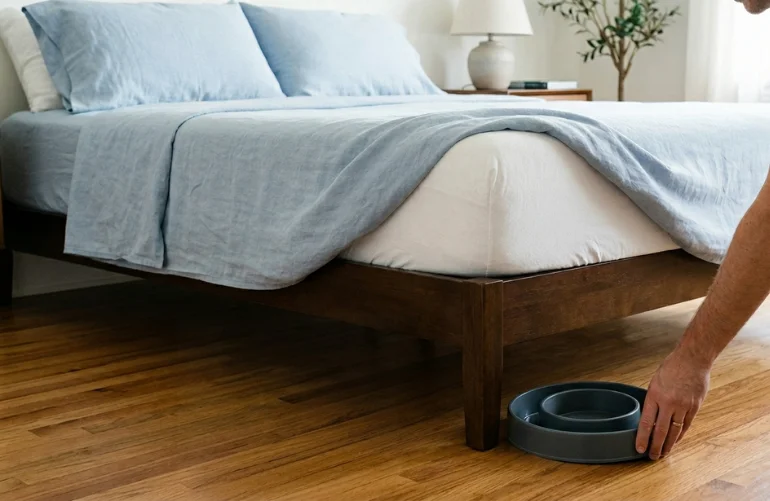
These plastic cups sit under each bed leg and trap bugs climbing up or down. They are the most common bed bug traps for bed legs and give you a clear count.
Glue Traps
These flat, sticky boards catch bugs that walk across them. Place bed bug glue traps along baseboards and under furniture for passive monitoring.
Sticky Monitor Strips
These are low-profile strips that slide under mattress seams and box springs. Many bed bug sticky traps like this detect early movement before the bugs multiply.
CO2 Traps
A co2 bed bug traps device releases a tiny puff of carbon dioxide to mimic a sleeping person. Bugs are drawn in and fall into a collection chamber, useful when you can’t find the nests.
How to Use Bed Bug Bed Traps Effectively
Setting traps correctly is just as important as buying them. A few simple habits make the difference.
Step 01: Pull Your Bed Away From the Wall
Move the bed at least six inches from the wall so the only path onto the mattress is up the legs. Tuck in your blankets so they don’t touch the floor and create a bridge. This isolation forces the bugs to crawl through the bed bug bed traps you’ve installed.
Step 02: Put Interceptors Under Each Leg
Slide a plastic interceptor under each bed leg, with the inner well around the leg and the outer well under bugs from the floor. Inside, a light dusting of talcum powder prevents the trapped bugs from climbing out. This arrangement makes your bed a safe island.
Step 03: Weekly trap checks, record keeping
Check each interceptor and glue board weekly with a torch. Write down how many bugs you find and which side of the bed they came from. Over time, falling numbers tell you the bed bug bed traps are working and the infestation is shrinking.
Mistakes That Make Traps Less Helpful
Even a good trap fails if you overlook a few simple things. Avoid these errors when setting up bed bug bed traps.
Step 01: Leaving Bedding Touching the Floor
A blanket or sheet that drapes onto the carpet gives bugs a direct highway to your body. They’ll bypass even the best bed bug traps for bed legs completely. Always lift all bedding off the ground before you go to sleep.
Step 02: Using Traps as the Only Solution
Traps catch bugs but don’t kill eggs hidden in the mattress seams or behind the headboard. If you rely solely on bed bug glue traps, the infestation keeps growing out of sight. Combine trapping with thorough vacuuming and laundry to hit the whole life cycle. According to pest control experts, traps are most effective when used as part of a broader integrated pest management strategy (Terminix). For comprehensive bed bug removal, combine trapping with professional services like Bed Bug Treatment .
Step 03: Forgetting to Replace Sticky Traps
A bed bug sticky trap full of dust or dead bugs stops being sticky. Once the surface is covered, new bugs walk right over it. Swap out your bed bug sticky traps every month or sooner if they look full, and date them so you remember.
When to Bring in a Professional for Bed Bugs
If the traps keep filling up week after week, the bugs have likely spread into the walls or furniture beyond what you can reach. A stubborn infestation that resists vacuuming, laundry, and trapping needs a stronger approach. Professionals bring tools that can treat the entire room in one go, hitting every crack that a trap can’t touch. They also know how to protect your belongings during the process.
-
Persistent Trap Activity: If your bed bug bed traps still catch bugs after a month of consistent effort, the root problem remains hidden. Expert inspection locates nests you might have missed entirely.
-
Widespread Hiding Spots: Bugs that have moved into electrical outlets and baseboard gaps are out of reach for any bed bug traps for bed legs. Professionals use specialized equipment to clear them completely.
If your traps keep filling up and the bites haven’t stopped, it’s time to get reinforcements. Contact A and B Carpet NY for expert bed bug solutions throughout New York and the surrounding areas.
Frequently Asked Questions
No, traps only catch bugs that move across them. They won't kill eggs or get to bugs hiding in mattress seams. Bed bug bed traps can be used as a monitoring tool in conjunction with thorough vacuuming and cleaning.
You can position them on baseboards, under nightstands, in the corners of the room. Check them regularly as once full, a bed bug glue trap stops working and needs to be replaced.
A co2 bed bug traps device can mimic human breath to lure bugs out of deeper hiding spots. Most of the time it catches more bugs than a passive sticky trap for bed bugs in the same amount of time.
Set a shallow dish under the leg of a bed. Cover the interior with a fine layer of talcum powder and add a few drops of water to the outer ring. This homemade bed bug trap is based on the interceptor design and can catch a few bugs to monitor.
Yes, the interceptors sit under the legs and have no toxins. Just make sure a curious pet doesn’t knock them loose, because shifting a leg can let bugs crawl past the bed bug traps for bed legs.