

To learn how to clean leather couch surfaces without drying them out, begin with the manufacturer's care instructions and identify the leather finish. Remove dust, treat spills promptly, and use only a cleaner approved for that particular leather. Too much water, strong household products, and repeated scrubbing can leave the surface stiff, discolored, or damaged. Conditioning is not a substitute for cleaning, and some finishes should not receive conditioner at all.
This guide explains the safe home process, common mistakes, and practical signs that deeper care is needed. A and B Carpet NY helps Brooklyn homeowners with leather furniture cleaning.
Why the Leather Finish Changes the Cleaning Method
Protected or pigmented leather has a surface coating that provides some resistance to everyday spills. Aniline leather is more absorbent, while nubuck and suede have a different surface texture. These differences determine whether a damp cloth is appropriate.
Check the care label or manufacturer's instructions before using any liquid. If the finish is unknown, limit home care to gentle dust removal until you can identify it. A cleaner suitable for protected leather may leave a mark on an absorbent finish.
Step 1: Remove Dust Before Wiping
Use a clean, soft, dry cloth to lift dust from the seat, back, and arms. A vacuum with a soft brush attachment can help remove crumbs from seams and beneath removable cushions. Keep the attachment from dragging against the leather.
Pay attention to armrests and headrests, where regular contact can leave visible buildup. It is better to take away the loose soil first, otherwise grit will be rubbed over the surface during cleaning.
Step 2: Test an Approved Cleaner
Choose a cleaner recommended by the manufacturer. Apply a small amount to a hidden area and follow the label. Allow the test section to dry before checking for color transfer, darkening, or a change in feel.
Do not assume that dish soap, vinegar, baking soda, or an all-purpose spray is suitable. Our homemade upholstery cleaner guide discusses general furniture cleaning, but its recipes should not be transferred to leather without manufacturer approval.
Step 3: Wipe Gently Without Saturating
If care instructions specify the use of water-based cleaning, lightly dampen a soft cloth with the approved product. Gently wipe a small area. “Don’t pour liquid on the couch, or allow moisture to accumulate at the seams.
Use a second cloth only when the product instructions require residue removal. Follow with a dry cloth. The goal is to remove surface soil without leaving the leather wet.
For anyone asking how to clean a leather couch, the safest amount of moisture depends on the finish, not on how dirty the couch looks.
Step 4: Handle Spills According to Their Type
Blot fresh liquid immediately with a clean absorbent cloth. Do not spread it across the seat. If the leather is absorbent or the spill has already penetrated, avoid adding more liquid until the correct treatment is known.
For leather furniture, start with gentle dust removal and follow the manufacturer’s instructions before applying any cleaner. The University of Delaware’s upholstery-care guidance recommends prompt blotting after spills and warns that heat or unsuitable household stain removers can cause damage. Leather can also crack, fade, or flake without proper care, so avoid experimenting with stronger products when the finish is uncertain.
|
Situation |
Safer First Response |
Main Concern |
|
Loose dust |
Dry cloth or soft brush |
Surface scratching |
|
Fresh liquid |
Blot promptly |
Spreading the spill |
|
Grease mark |
Absorb excess, then stop |
Driving oil deeper |
|
Unknown finish |
Check manufacturer guidance |
Darkening or staining |
|
Cracked surface |
Request an assessment |
Further finish damage |
Step 5: Let the Surface Dry Naturally
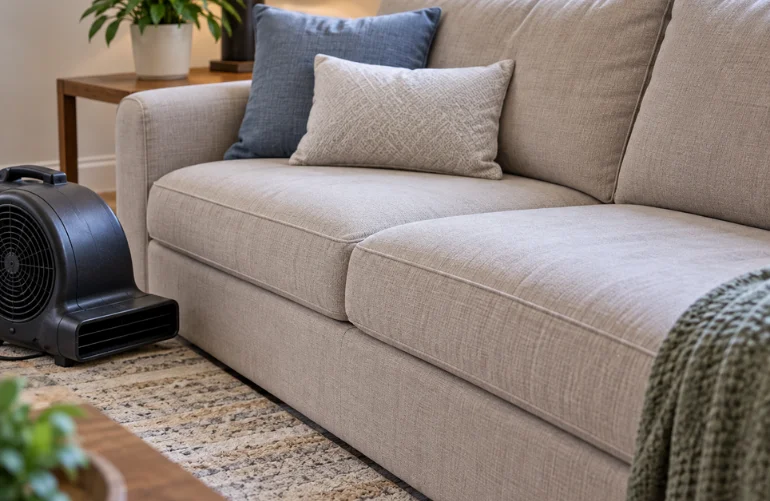
Leave the couch in a ventilated room and allow any approved cleaning moisture to evaporate naturally. Do not use a hair dryer, heater, or strong direct sunlight to speed the process.
Once dry, inspect the treated area in normal light. If it looks darker, feels sticky, or has developed a ring, stop applying products. Another cleaning attempt may make the problem harder to assess.
Cleaning and Conditioning Are Different Tasks
Cleaning removes soil. Conditioning is a separate care step intended for suitable leather finishes. It should not be used automatically after every wipe-down.
If you are researching how to take care of leather couch surfaces, check whether the manufacturer recommends a conditioner and how often it should be applied. Use only a compatible product in the directed amount. Excessive application can leave residue or change the appearance.
A dry-looking surface may also indicate finish wear rather than a simple need for conditioner. Cracking, peeling, or color loss requires assessment instead of repeated product application.
DIY Care vs Professional Leather Cleaning
Dusting and small, compatible spills are reasonable home jobs. It’s better to seek professional care when the finish is unknown, multiple seating areas are discolored or previous attempts to clean have left discoloration.
Repeated DIY attempts can consume time and introduce additional moisture or residue. A professional can inspect the leather before selecting a treatment, reducing the need to experiment with different products.
A and B Carpet NY offers upholstery cleaning in Brooklyn, including leather furniture. The appropriate approach depends on the couch's finish and condition.
When Cleaning Alone Will Not Solve the Problem
If your couch is peeling, cracking or fading, routine cleaning may not be able to restore the damaged finish. Don’t try to make the area look more even with stronger products.
Persistent grease marks, widespread buildup, and uncertain leather types are also reasons to seek an assessment. The goal is to determine whether cleaning is suitable or whether the surface needs a different kind of care.
Leather Couch Cleaning in Brooklyn With A and B Carpet NY
If you need help with how to clean leather couches that have persistent soil or uncertain finishes, A and B Carpet NY can assess your furniture and recommend an appropriate cleaning approach. Our Brooklyn upholstery cleaning service includes leather furniture, with treatment selected according to its condition.
Check the areas we serve, visit our contact page, or call (800) 659-0691 to discuss your couch. Professional assessment can help avoid repeated home treatments when cleaning alone is not enough.
Frequently Asked Questions
Baby wipes can contain ingredients that are harmful to leather, so use a product recommended by your couch manufacturer.
How often you condition depends on the leather finish and the manufacturer’s instructions. Some finishes should not be conditioned at all.
Cleaning can remove dirt from around a scratch, but it can’t fix damage to the leather or its finish.
Product residue, body oils or a failing finish can all cause stickiness, so be sure to identify the cause before trying another cleaner.