
Vacuuming alone won’t pull out the oily film and trapped smells that build up in a carpet over time. The deeper layers hold onto pet dander, cooking residue, and everyday dust that eventually leave the room smelling stale. Learning how to clean carpet with baking soda is a budget‑friendly way to reset the fibers without turning to strong solvents. Baking soda absorbs moisture, neutralizes odors, and acts as a very fine grit that loosens dirt when vacuumed away.
For a more thorough refresh, many people pair baking soda with vinegar. The combination creates a fizzing reaction that lifts light stains and deodorizes at the same time. Understanding how to clean carpet with baking soda and vinegar opens up an option that uses two pantry staples most homes already have. This guide walks through both the dry baking soda method and the vinegar‑boosted version, plus the key steps that prevent residue or overwetting.
Check The Carpet Material First
Before spreading any powder or liquid, it helps to know what the carpet is made of. Synthetic carpets, like nylon and polyester, handle both baking soda and a light vinegar mist without any trouble. Wool carpets are more sensitive, especially to acid. Vinegar can damage wool fibers over time, so using baking soda to clean carpet on a wool rug should stick to the dry method only, with a quick vacuum and no liquid. Always test a hidden corner with a small amount of baking soda and water on a white cloth. If any dye transfers, stop and use only the dry vacuum approach.
The backing also matters. A carpet with a thick foam pad underneath can trap moisture if the vinegar solution is sprayed too heavily. That trapped dampness leads to a musty smell later, undoing all the freshening work. So when learning how to clean carpets with baking soda, the rule is the same: damp, never wet. Light mists and dry powders protect the pad and keep the carpet drying fast.
Dry Method: Cleaning Carpet With Baking Soda
This is the easiest method, and is suitable for general odor removal and light soiling. It requires no water and takes just a few hours.
Step 01: Vacuum Thoroughly
Run a vacuum with a beater‑bar over the entire carpet twice, moving in opposite directions. This lifts loose dust, hair, and fine grit that would otherwise get trapped under the baking soda. A clean surface lets the powder reach deeper into the pile.
Step 02: Sprinkle and Brush
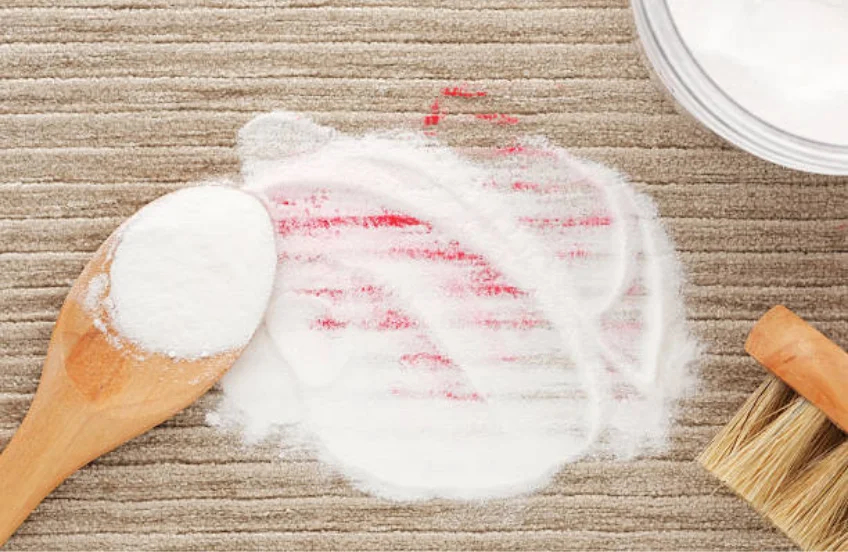
Sprinkle baking soda liberally onto the carpet. Pay special attention to high traffic areas and any areas with a slight pet or food odour. Use a soft‑bristle brush or a clean broom to work the powder gently into the fibers. The brushing helps the baking soda contact the oils and moisture trapped at the base of the pile. Let the powder sit for at least three hours, or overnight if the odors are strong.
Step 03: Vacuum Again
Run the vacuum over the carpet once more, taking your time to remove all the white dust. A second pass with the beater‑bar off picks up any remaining powder that settled deep in the backing. The carpet should feel clean and smell neutral immediately after. This is the core of carpet cleaning with baking soda without any water at all.
Wet Method: Baking Soda And Vinegar
For light stains and a deeper deodorizing lift, a vinegar and baking soda combination works well on synthetic carpets. The bubbling action loosens up dried up spills and attracts trapped odors.
Let us consider the correct measures to deal with this moist application rightly.
Step 01: Make a Vinegar Spray
In this stage, you need to combine equal parts of white vinegar and cool water in a spray bottle. Just do not put soap in it. Soap can leave a sticky residue that attracts dirt later. Just shake the bottle and spray the smelly area lightly until it is damp, but not soaking wet. Initially, the smell of vinegar is strong, but it fades as it dries.
Step 02: Sprinkle Baking Soda on Wet Spot
After completing the first stage, add some baking soda to the vinegar spray. You will see the powder fizz and bubble as it combines with the acid. Let the reaction sit for about five minutes. That should be plenty of time for the carbon dioxide bubbles to float dirt from the fibers. Here is how to clean carpet with baking soda and vinegar.
Step 03: Rinse and Pat Dry
Work the baking soda into the pile by lightly agitating in one direction with a soft brush. Then press a dry white cloth firmly on the area to soak up the excess water. Repeat with fresh cloths until the carpet is lightly damp only. Be sure to fan it and let it dry completely before you walk on it. The final vacuum pass removes any last bits of baking soda. This method shows how to clean carpets with baking soda and vinegar without leaving behind a wet mess.
Mistakes That Can Damage Household Carpets
Even a natural cleaner can cause problems if used too freely. Avoiding these common errors keeps the carpet safe.
A few wrong moves can turn a simple refresh into a costly replacement. Watch out for these common slip‑ups.
Leaving Baking Soda in the Carpet
If even a thin layer of powder stays behind after vacuuming, it acts like fine sandpaper underfoot and wears down the fibers. Always vacuum twice to remove every trace of baking soda to clean carpet completely.
Spraying Too Much Vinegar
A heavy spray saturates the backing and can cause a sour smell as the pad dries slowly. Light mists only, because using baking soda to clean carpet works best when the carpet dries within a few hours.
Using on Delicate Wool
Vinegar is acidic and can strip the natural lanolin from wool, making the fibers brittle. Stick to the dry baking soda method for any wool or wool‑blend rugs to avoid damage.
When To Call An Expert For A Deeper Clean
Baking soda is great for surface odors and light grime, but it cannot extract years of embedded dirt or heavy pet urine that has soaked into the pad. If the carpet still smells after a baking soda treatment or a vinegar rinse, the source of the odor lies deeper than the fibers. Trained teams use hot water extraction and plant‑based solutions that pull contaminants from the backing without harming the carpet.
-
Stubborn Urine Odors: Enzymatic cleaners and deep extraction are needed when baking soda and vinegar cannot stop the smell from returning. Expert tools reach the pad where the crystals sit.
-
Wall‑to‑Wall Carpet in Homes and Offices: When entire rooms need a reset, carpet cleaning with baking soda alone is too labor‑intensive. A trained crew cleans every inch evenly in a single visit.
Keep a box of baking soda in the pantry for quick deodorizing between deep cleans. If the carpet still feels grimy or holds a smell after the home method, it is time for a thorough extraction. Contact A and B Carpet NY for expert carpet cleaning throughout New York and all surrounding areas.
Frequently Asked Questions
Sprinkle baking soda heavily over the area, let it sit overnight, then vacuum thoroughly. For strong urine smells, follow with a vinegar mist and another light baking soda application, then dry completely.
Soap can leave a sticky film that attracts dirt. Baking soda is best for cleaning a carpet by itself or with vinegar for fizzing action, but not with detergents.
Work the baking soda in gently with your fingers or a soft brush, and use a suction‑only vacuum to avoid tangling the long fibers. Let it sit longer, up to eight hours, for best results.
Yes, baking soda is non‑toxic and safe once vacuumed up. Keep children and pets off the damp area during the vinegar method until the carpet is completely dry.
Mist the stain with vinegar, apply baking soda, let it fizz, then blot and dry. Repeat the process if a faint shadow remains, but deep‑set stains may need professional extraction.