
What Do Bed Bugs Look Like?
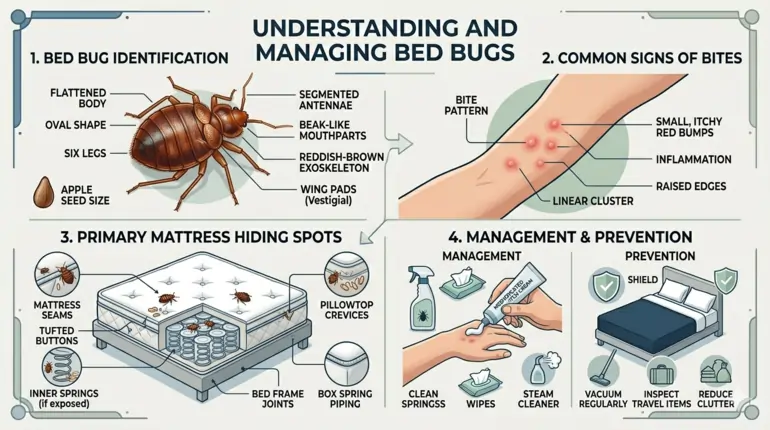
Identifying bed bugs correctly is the most vital step. If you mistake them for something else, you might waste time and money on the wrong treatment. Let's look at how they appear at every stage of life and how to tell them apart from the usual suspects.
1. Bugs That Look Like Bed Bugs
People often confuse carpet beetles, booklice, and bat bugs with bed bugs. Bat bugs look almost identical, but they have longer hairs and usually prefer to stay near bat colonies.
2. Bed Bug Size, Shape, and Appearance
Adults are oval, flat, and wingless. They are about the size of an apple seed, usually 4 to 5 millimeters long. After a blood meal, their bodies swell up and look more like a tiny, dark cigar.
3. Bed Bug Color Variations
If they haven't eaten, adults look rusty or reddish-brown. Once they feed, they turn a darker mahogany or deep red. This color change is a great way to tell if they are actively feeding in your home.
4. What Do Bed Bug Eggs Look Like?
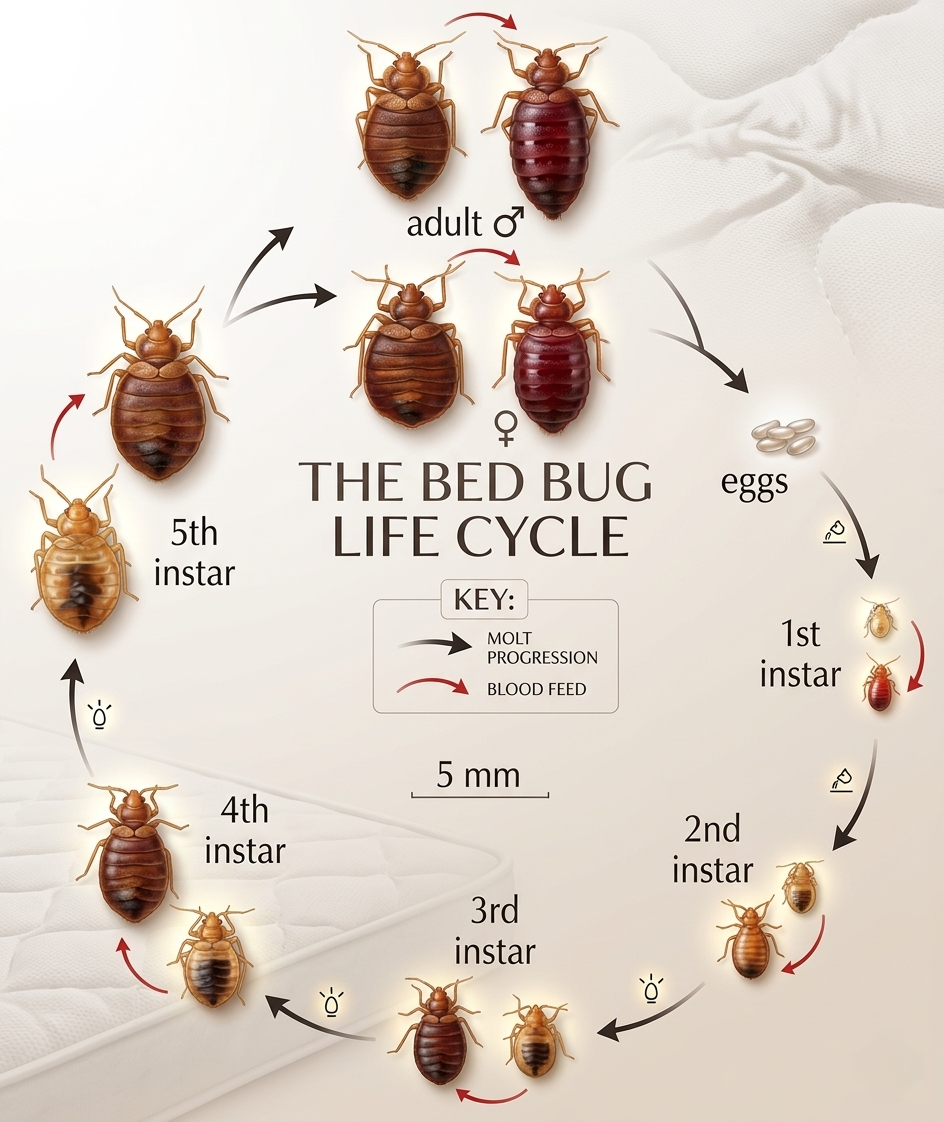
The eggs are pearl-white and oval. They are only about 1 millimeter long, looking like tiny grains of salt glued into cracks or seams.
5. Bed Bug Nymphs (Baby Bed Bugs)
Newly hatched nymphs are translucent or pale yellow. Because they are so small and clear, they are very hard to see. They go through five stages, getting darker and bigger after every meal.
Types of Bed Bugs
There are several species, but only two are likely to invade your home and feed on you.
1. Common Bed Bug (Cimex lectularius)
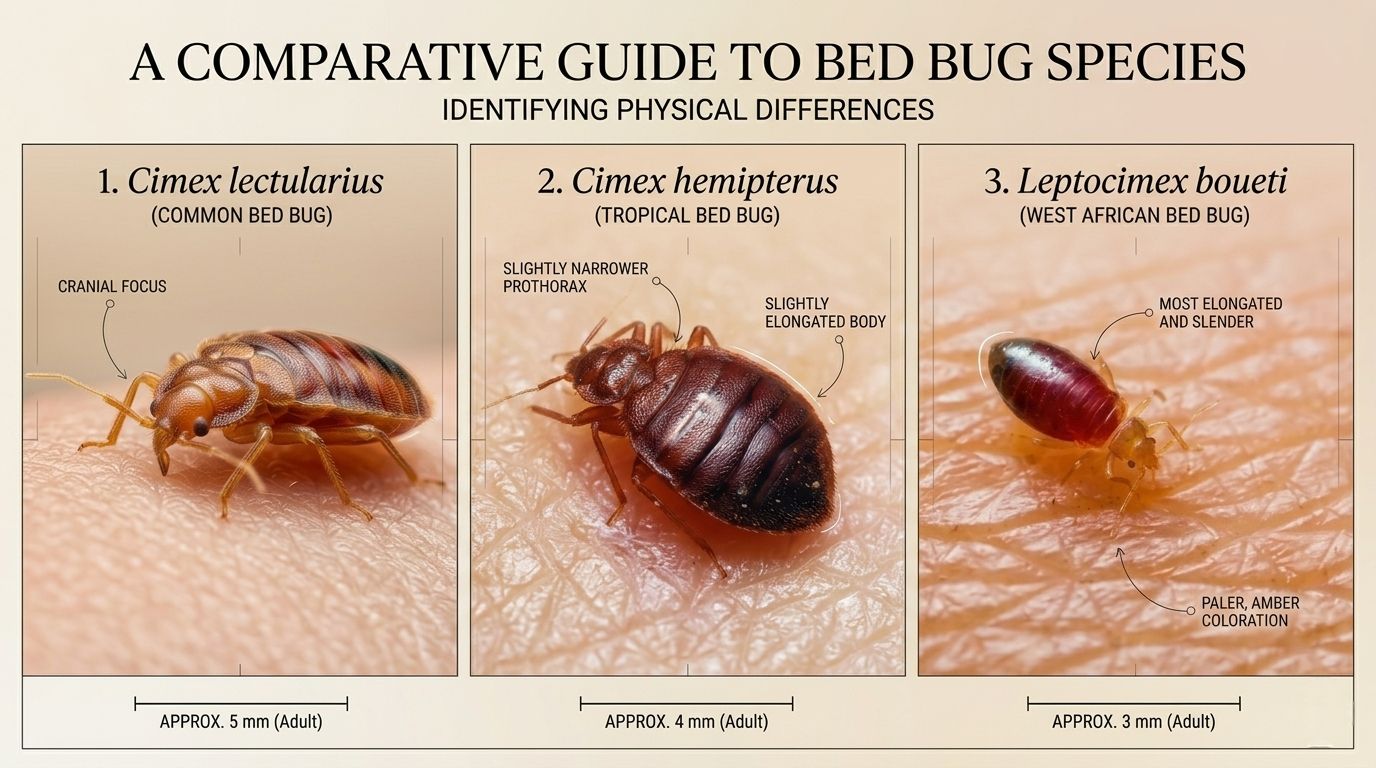
This is the main species found in North American homes. They love living indoors and have unfortunately developed a strong resistance to many common bug sprays.
2. Tropical Bed Bug (Cimex hemipterus)
These prefer warmer climates near the equator, but they have been found in places like Florida. They look very similar to the common variety and behave in much the same way.
3. Other Bed Bug Species
Most other members of this family prefer birds or bats. While bat bugs might wander into a room if their host leaves, they rarely set up a permanent home with humans.
Bed Bug Feeding Habits
These pests strictly eat blood. Their specific habits dictate exactly how a small problem turns into a full-blown infestation.
1. What Do Bed Bugs Eat?
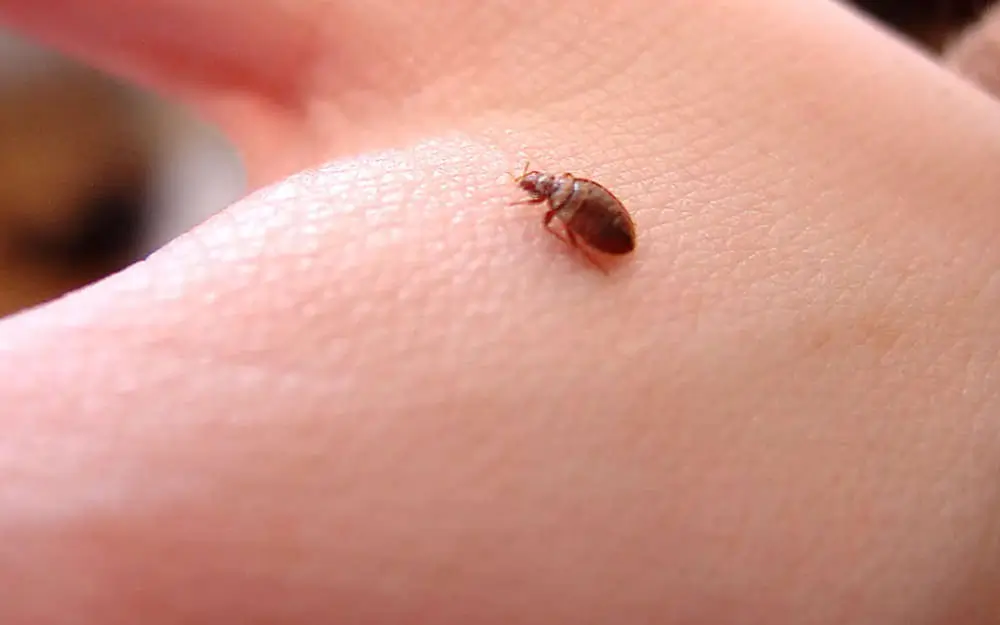
They live exclusively on blood. While humans are their favorite target, they will settle for other warm-blooded animals if they have to.
2. How Often Do Bed Bugs Feed?
If a host is nearby, they usually eat every three to seven days. Nymphs must have at least one full blood meal before they can grow into their next stage. If you want to know more about How Often Do Bed Bugs Feed Compared to Other Pests
3. Can Bed Bugs Feed on Pets?
Yes, they will bite dogs or cats if humans aren't around. The good news is they don't live on pets like fleas do. They just bite and then run back to their hiding spots.
4. How Long Can Bed Bugs Live Without Feeding?
Adults are incredibly hardy and can survive for months without food. In cooler temperatures, they might even last a year. This is why leaving a room empty won't solve the problem.
Where Do Bed Bugs Live & Hide?
They love dark, tight cracks close to where people sleep. Think of any spot within reach of your bed or couch.
1. Common Bed Bug Hiding Places
Check mattress seams, bed frames, and headboards first. In a heavy infestation, they can spread to curtains, electrical outlets, or even your phone charger.
2. Bed Bugs in Mattresses
The mattress is usually ground zero. The bugs cluster along the seams and tags. They rarely stay out in the open unless they are actively looking for a meal.
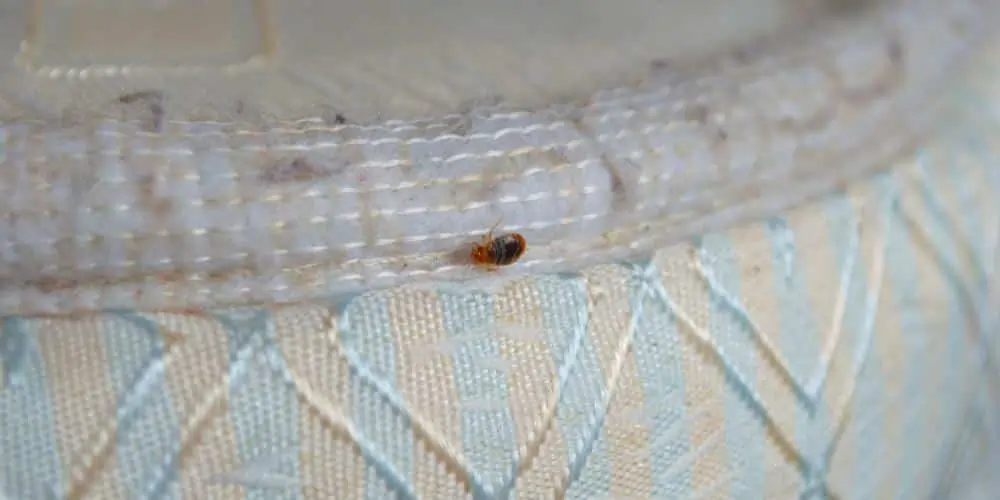
3. Bed Bugs in Furniture
Any upholstered furniture is a risk. They hide in wood joints and drawer tracks of nightstands. If a piece of furniture is near your bed, it’s a potential hiding spot.
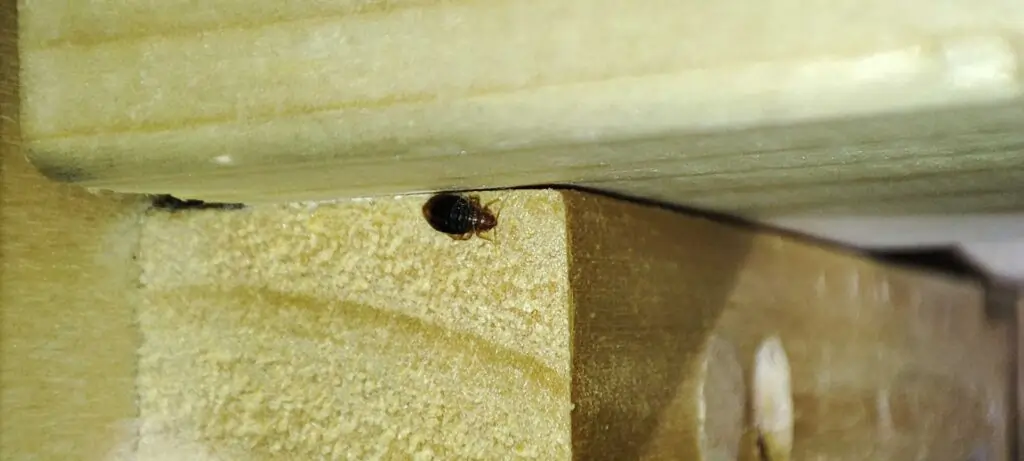
4. Bed Bugs in Couches & Chairs
Couches used for naps are prime real estate. They hide in cushion zippers and the internal frames of recliners. There are so many tiny nooks for them to disappear into.
5. Bed Bugs in Pillows & Bedding
While they occasionally hide in pillow folds, you are more likely to find blood spots or fecal marks on the pillowcases first. That is often the first warning sign people see.
6. Bed Bugs in Carpets & Rugs
Look along the edges where the carpet meets the wall. Rugs with fringe also provide perfect little gaps for them to squeeze into near the bed.
7. Bed Bugs in Walls & Cracks
As the colony grows, they move into wall voids and behind baseboards. This is exactly how they travel between units in apartment buildings.
8. Bed Bugs in Clothes
They don't live on the clothes you are wearing, but they will hide in laundry piles. Luckily, a high-heat wash and dry cycle will kill them at any stage.
If you want to know more about Where Bed Bugs Hide: A Guide to Bed Bug Hiding Places in Your Home.
What Causes Bed Bugs?
Bed bugs are not a sign of a dirty home. They are expert hitchhikers. They enter on luggage, backpacks, or used furniture. Increased travel and resistance to pesticides have helped them spread everywhere. It can happen to anyone, so there is no reason to feel embarrassed.
A Close Look at Where Do Bedbugs Come From and Their Favorite Hiding Spots
How Fast Can Bed Bugs Spread?
They reproduce very quickly. A small issue can become a massive headache in just a few months.
1. Reproduction & Multiplication
One female lays about one to five eggs every day. That adds up to hundreds over her life. Those eggs hatch quickly, and the babies become adults in about a month.
2. Infestation Timeline
In one month, you have new nymphs feeding. By three months, you could have hundreds of bugs. If you don't catch them by six months, the population could be in the thousands.
3. How Bed Bugs Travel
They crawl about three or four feet per minute. While they aren't fast, they are persistent. They mostly rely on humans to move them from one building to the next via bags and furniture.
Signs of Bed Bugs
You have to look for the physical evidence they leave behind to catch them early.
1. Blood Stains & Marks
If you see rusty blood spots on your sheets, it usually means you crushed a bug while sleeping. These are often found near the edges of the bed.
2. Dark Spots & Feces
Fecal spots look like tiny black dots from a marker. This is actually digested blood. You will usually find these concentrated along the seams of your mattress.
3. Signs in Carpets & Furniture
Check for shed skins in furniture joints and look for clusters of tiny white eggs. Finding these confirms you have a breeding population on your hands.
Check A Simple Guide to Bed Bug Signs in Carpets and Bedding.
Bed Bug Bites and Symptoms
Everyone reacts differently, but most bites share a few common traits.
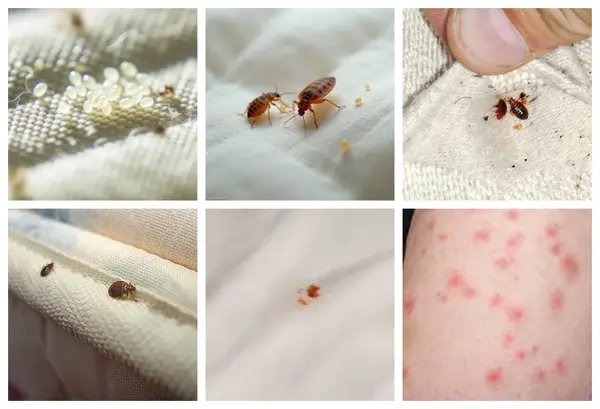
1. What Do Bed Bug Bites Look Like?
They usually appear as small, itchy red bumps. You will often see them in a straight line or a zigzag pattern on your skin.
2. Common Symptoms of Bed Bug Bites
Most people deal with itching and swelling that lasts for a few days. Interestingly, some people have no reaction at all, which is why infestations sometimes go unnoticed for weeks.
3. Allergic Reactions to Bed Bug Bites
Some people develop large welts or hives. While serious reactions are rare, you should seek medical help if you have trouble breathing or severe swelling.
If you know more about Symptoms, Tips & Understanding Allergic Reactions to Bed Bug Bites.
How to Get Rid of Bed Bugs
To win this fight, you need a full plan. This means clearing out clutter, washing fabrics on high heat, and vacuuming every single crack. Because they are so good at hiding, professional help is usually the best path.
Bed Bug Treatment Methods
Pros often use a combination of tools to make sure every bug is gone.
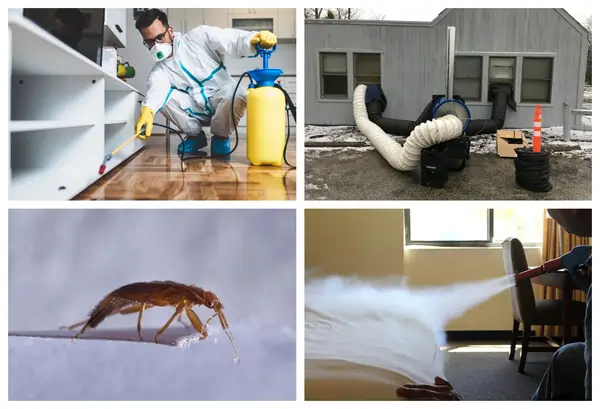
1. Chemical Treatment for Bed Bugs
Pest control pros use specific chemicals that get around the bugs' resistance. They often put dust into wall voids for long-term protection. This is very difficult to do correctly as a DIY project.
2. Heat Treatment for Bed Bugs
This method cooks the entire room to a temperature that kills bugs and eggs instantly. It is very effective and often solves the problem in one visit, though it can be expensive.
3. Cold Treatment (Freezing Bed Bugs)
True freezing kills them, but your home freezer isn't cold enough. Professionals use specialized equipment to freeze items that can't be treated with heat or chemicals.
4. Steam Cleaning for Bed Bugs
High-heat steam is a great way to kill bugs and eggs on contact. It works well for mattress seams and baseboards. Just make sure the steamer gets hot enough to do the job.
Bed Bug Traps
Traps are best used for monitoring the problem rather than fixing it.
1. Types of Bed Bug Traps
Interceptors go under bed legs to catch bugs as they try to climb up. These are great for seeing if your treatment is actually working.
2. Homemade Bed Bug Traps
You can make DIY traps using soapy water or yeast to attract them. These might help you find out if you have bugs, but they won't be enough to clear an infestation.
How to Prevent Bed Bugs
Prevention is all about staying alert when you travel and protecting your home.
1. Travel Safety Tips
Always check the hotel mattress and headboard when you arrive. Keep your bags on the luggage rack and never leave your suitcase on the floor or the bed.
2. Prevent Bringing Bed Bugs Home
Unpack your bags in the garage or outside. Immediately wash all your travel clothes in hot water and dry them on high heat for at least 30 minutes.
3. Mattress & Home Protection
Put bed bug covers on your mattress and box spring. Seal up cracks in your walls and keep your home free of clutter. These steps make it much harder for bugs to find a place to hide.
Frequently Asked Questions
Carpet beetles (rounder, patterned), bat bugs (nearly identical), fleas (smaller, jump), and spider beetles (humped back). Carpet beetles are the most common misidentification.
Pearl-white, sticky, and the size of a grain of salt (1mm). They are laid in tight clusters along mattress seams, baseboards, and rug fringes.
Adults survive 2 to 3 months at normal room temperature. In cooler environments, they can enter dormancy and live over a year without blood.
Within 5-8 feet of where people rest: mattress seams, box springs, headboard cracks, and underneath area rugs. They prefer dark, undisturbed crevices.
They are hitchhikers transported from infested hotels, public transit, or used furniture. They do not arise from dirt or poor hygiene.
A female lays 1-5 eggs daily, with nymphs reaching adulthood in just 5 weeks. A small introduction can become a severe infestation within 90 days.
Permanent elimination requires professional heat treatment (122°F+ kills all stages) combined with silica gel dust for long-term residual protection.
Silica gel (desiccant dust) is most effective as bugs cannot build resistance, it dehydrates eggs and adults. Contact sprays containing pyrethroids kill on contact but often fail against resistant eggs.
Inspect hotel headboards and keep luggage on metal racks. Use bed bug-proof encasements on mattresses and steam-clean secondhand rugs before bringing them inside.
Dark, ink-like fecal spots on sheets, shed translucent skins, and a sweet/musty odor. Reddish blood smears on pillows indicate crushed bugs.
Red, itchy welts appearing in a straight line or cluster of three on exposed skin. Some people have no reaction, while others may develop large hives.